Shure SM7B or Shure MV7+ (Noir)?
The definitive comparison. Find out which of these two heavyweights is really right for your needs.
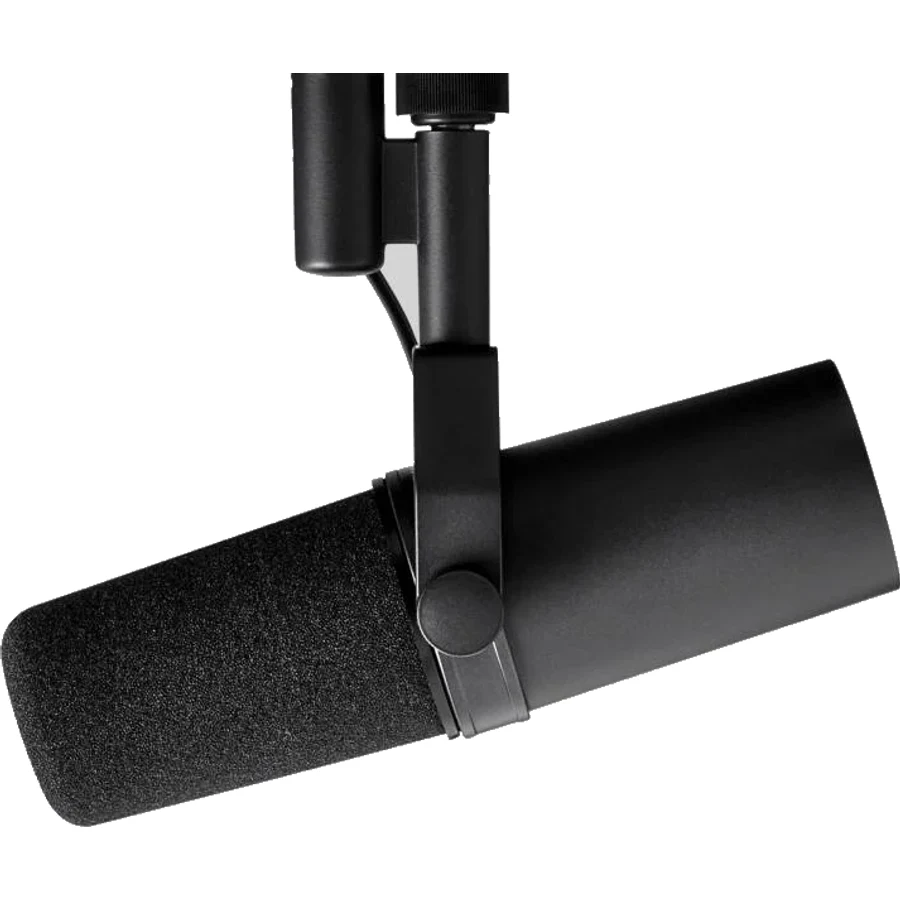
Shure SM7B
Cardioid dynamic microphone for voice.
Advantages Shure SM7B
- Widely documented background rejection: PC fans and mechanical keyboards are almost inaudible in the takes people share.
- Flat frequency response designed for close-miked voice: this is the 'radio voice' rendering podcasters cite as the benchmark.
- Internal shock mount and sturdy construction explain its longevity: units still in service after more than ten years are running in broadcast.
Drawbacks
- Hungry for gain: most entry-level interfaces force you to add an inline preamp (Cloudlifter, FetHead) to avoid hiss.
- At 765 g on a light boom arm it nose-dives: the weight demands a decent arm, which adds to the budget.
Price & specs
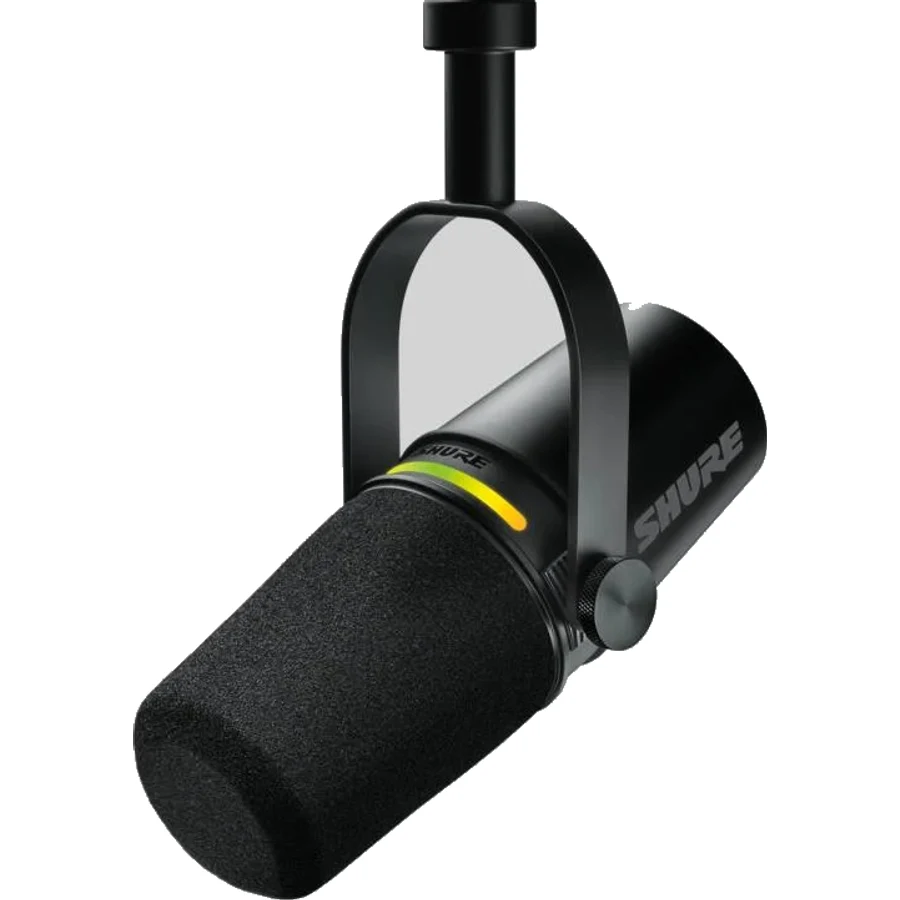
Shure MV7+ (Noir)
The ultimate hybrid USB/XLR microphone for podcasters.
Advantages Shure MV7+ (Noir)
- Dual USB and XLR output: you can start with no gear and switch to XLR later without changing microphones.
- Onboard audio processing (auto level, EQ, noise reduction) that makes the microphone usable in an untreated room.
- Decent rejection for a desk microphone, with a rendering close to the SM7B in close-miked use.
Drawbacks
- The built-in processing only applies over USB: on XLR you lose the whole DSP and need an interface able to supply clean gain.
- The automatic EQ is regularly criticised for smoothing the voice, which does not suit anyone after a raw timbre.
Price & specs
At a glance
| Criterion | Shure SM7B | Shure MV7+ (Noir) |
|---|---|---|
| Starting price | — | — |
| Free plan | No | No |
The final verdict
The decision depends above all on your profile and the way you intend to use it.
Choose Shure SM7B if:
Still the reference for podcasting and voice-over in an untreated room. It is the logical investment if you record voice regularly and accept a high-clean-gain interface and a solid boom arm; otherwise, a well-designed USB microphone is enough.
Choose Shure MV7+ (Noir) if:
The right pick if you are starting out alone, with no interface and no treated room: the USB output makes the microphone immediately usable and the XLR output saves you from buying another one as you move up. Avoid it if you want the raw SM7B sound on XLR — it is not the same microphone.